Weighted vs Unweighted Keys: What is the Difference?
The single most important decision you will make when buying a digital instrument is the key action. Here is an honest, straightforward comparison of weighted and unweighted keys to help you make the right choice.

Julian Harmon
Concert Pianist & Reviewer · April 18, 2026 · 8 min read
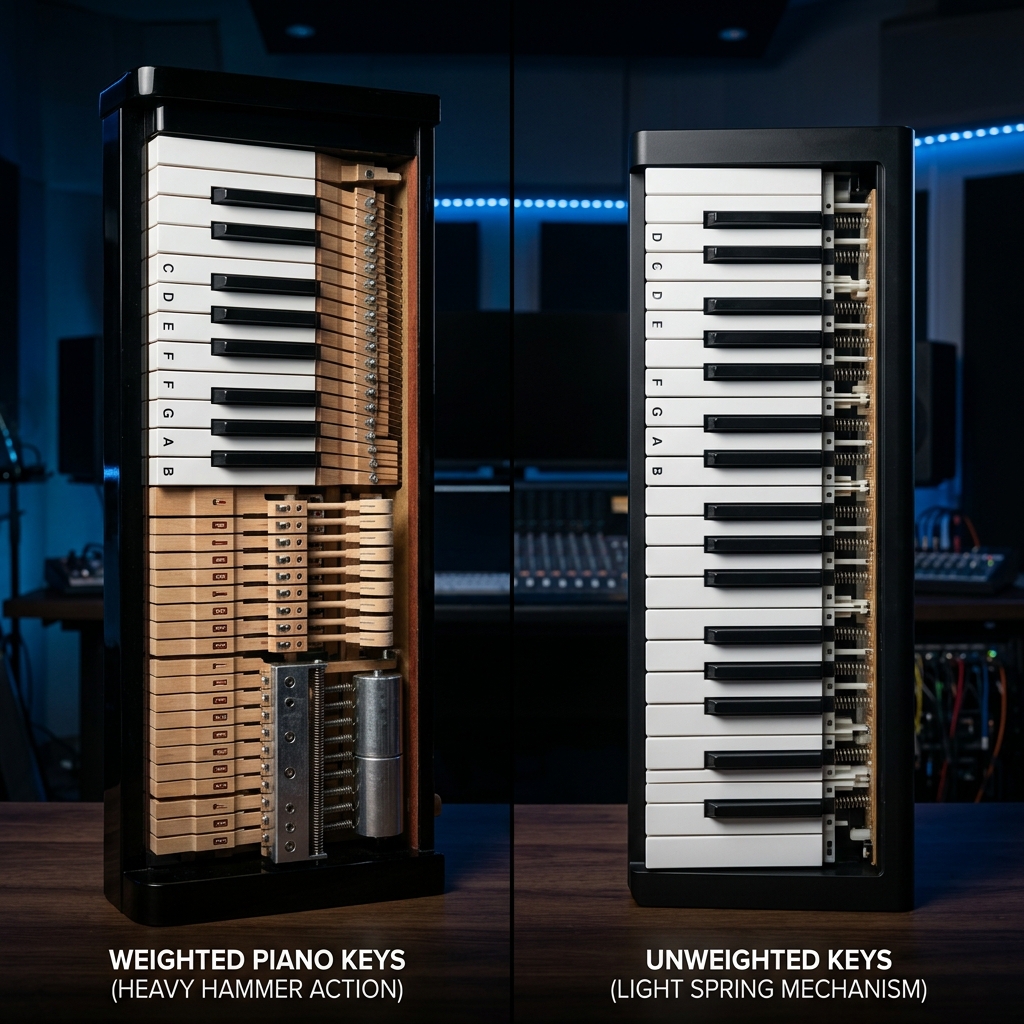
Weighted keys (often found on digital pianos) versus unweighted keys (common on synthesizers).
When my students ask for buying advice, their first question is almost always about sound. But as a concert pianist with over thirty years of experience, I always redirect them to a more critical feature: the key action.
The difference between weighted vs unweighted keys is night and day. It affects not only how the instrument feels to play, but whether you can actually develop proper piano technique. Let us break down exactly what these terms mean, how they feel under your fingers, and which one you should buy.
What Are Weighted Keys?
Weighted keys are designed to replicate the mechanical feel of a traditional acoustic piano. When you play a real acoustic piano, your finger triggers a complex wooden mechanism that throws a felt hammer against a steel string.
This physical action creates natural resistance. You have to push against the weight of the mechanism.
Digital pianos with weighted keys simulate this exact resistance. Instead of triggering a real hammer and string, the key triggers an internal lever system equipped with counterweights. The result? The keys feel heavy, substantial, and require deliberate force to depress.
Graded Hammer Action Explained
If you are shopping for a premium instrument, you will often see the term "graded hammer action."
On a real grand piano, the keys on the left side (bass) are physically heavier to press than the keys on the right side (treble) because they are lifting thicker strings and larger hammers. Graded action digital pianos replicate this perfectly. Instruments like those in my best weighted key pianos guide use this advanced technology to provide an uncompromisingly authentic feel.
What Are Unweighted Keys?
Unweighted keys—also known as synth-action or waterfall keys—are completely different. They do not attempt to simulate an acoustic piano.
Instead of a hammer mechanism, unweighted keys use a simple spring. When you press the key down, the spring pushes it back up. There is virtually no resistance. The keys feel light, springy, and effortless to press.
You will typically find unweighted keys on portable keyboards, synthesizers, MIDI controllers, and budget entry-level models.
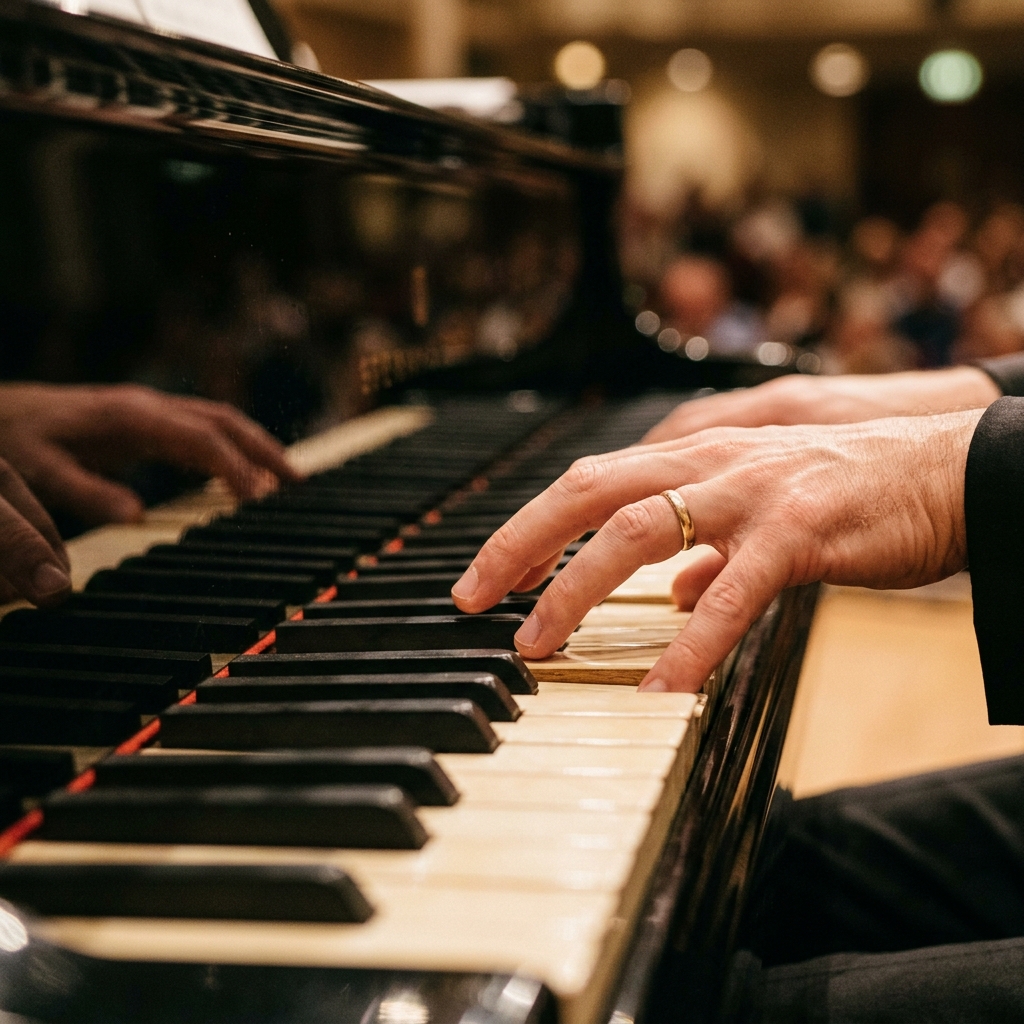
Proper finger placement requires the resistance that only weighted keys can provide.
The Middle Ground: Semi-Weighted Keys
You might also come across "semi-weighted" keys. This is a compromise between the two extremes.
Semi-weighted actions still use the spring mechanism of an unweighted keyboard, but they add a small weight to the underside of the key. This provides slightly more resistance and a firmer feel than synth-action, but it still lacks the authentic hammer "thud" of a fully weighted digital piano.
Pros and Cons: Which is Better?
🎹 Weighted Keys
- ✓ Builds proper finger strength.
- ✓ Allows for expressive dynamic control (soft vs loud).
- ✓ Eases transition to acoustic pianos.
- ✗ Heavier and less portable.
- ✗ Generally more expensive.
⚡ Unweighted Keys
- ✓ Very lightweight and highly portable.
- ✓ Excellent for fast synthesizer runs or organ sweeps.
- ✓ Highly affordable for tight budgets.
- ✗ Cannot build acoustic piano technique.
- ✗ Very difficult to play with subtle dynamics.
Which One Should You Buy?
The choice comes down to your musical goals. Let me be definitive.
If You Want to Learn Piano: Buy Weighted Keys
If your goal is to learn how to play the piano—whether classical, jazz, or pop—you absolutely must practice on fully weighted keys.
Unweighted keys will not build the finger dexterity and muscle memory required for the instrument. If you practice on a spring-action keyboard and then sit down at a real acoustic piano, your fingers will literally not have the strength to press the keys down evenly. If you are starting out, refer to my guide on the best digital pianos for beginners to find an affordable model with a great weighted action.
If You Produce Electronic Music: Buy Unweighted Keys
If your primary goal is to produce beats, play synthesizer leads, or trigger drum samples in software, unweighted keys are actually superior.
The lack of resistance allows for incredibly fast playing that is impossible on a weighted keyboard. You will not experience finger fatigue when recording long electronic sessions.
Final Thoughts
Do not let budget be your only deciding factor. While unweighted keyboards are cheaper, they are a completely different instrument than a piano. If you want to be a pianist, invest in a weighted digital piano. It is the only way to genuinely connect with the music.
If you are still unsure which specific model fits your needs and budget, try our Piano Finder tool. It takes less than a minute and will recommend the perfect instrument for your exact situation.
Frequently Asked Questions
Can I learn piano on unweighted keys?
Yes, you can learn basic notes and chords on unweighted keys. However, you will not develop the proper finger strength, dynamics control, or technique required to play a real acoustic piano. For long-term piano learning, weighted keys are highly recommended.
What does 'semi-weighted' mean?
Semi-weighted keys combine the spring mechanism of an unweighted keyboard with a light weight attached to the key. They offer slightly more resistance than unweighted keys but fall far short of simulating a true acoustic piano hammer action.
Are weighted keys harder to play?
Initially, weighted keys require more physical effort than unweighted keys. However, this resistance is what allows for expressive, dynamic playing. Once your fingers build strength, weighted keys actually provide better control and are easier to play expressively.
Do all digital pianos have weighted keys?
No. While most quality digital pianos feature weighted keys, many budget or beginner 'keyboards' use unweighted or semi-weighted actions. Always check the specifications for terms like 'graded hammer action' or 'fully weighted' before purchasing.
Find Your Ideal Instrument
Not sure if you need weighted or unweighted keys? Take our 60-second quiz to get a personalized recommendation.
🔍 Start the Piano FinderJulian Harmon
Concert Pianist & Lead Reviewer
Julian has spent over 30 years performing on both digital and acoustic pianos worldwide. He founded PianoXpert to provide honest, musician-first advice. Read more about Julian →