Roland FP-10 Review: The Honest Truth From a Concert Pianist
The internet claims this is the greatest budget piano ever made. I spent three weeks putting it through its paces to separate the marketing hype from the musical reality. Here is exactly what the FP-10 gets right, and what it gets wrong.

Julian Harmon
Concert Pianist & Reviewer · April 18, 2026 · 8 min read
PianoXpert Rating
8.5/10
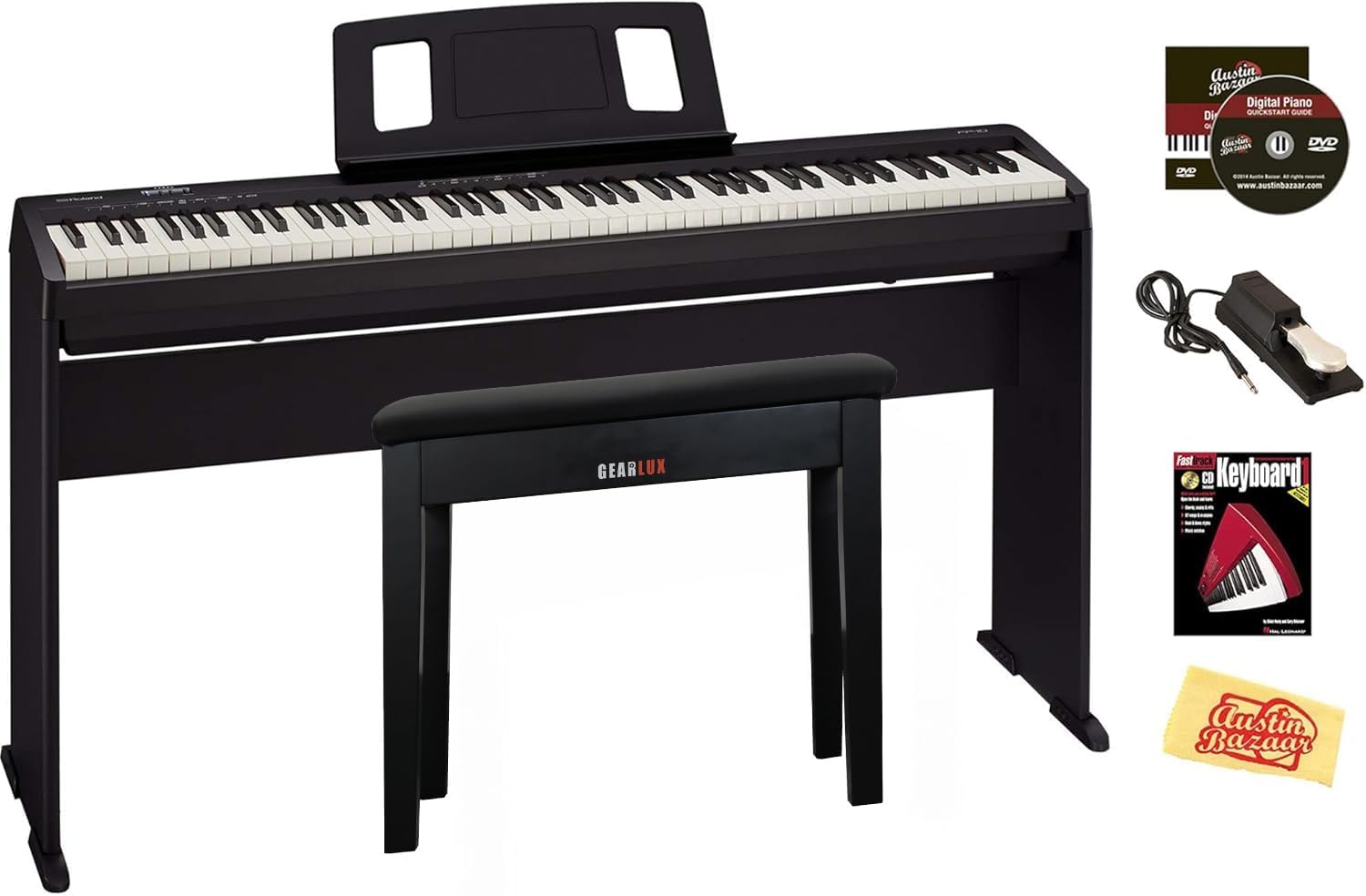
The Roland FP-10: Stripped back to the absolute essentials.
When a student asks me to recommend a digital piano under $500, my answer usually involves a heavy sigh and a lot of caveats. At that price point, you are almost always sacrificing something critical—usually the key action.
The Roland FP-10 is the rare exception that makes me stop sighing.
Roland took a very specific strategy with this instrument: they took the premium key mechanism from their $800+ models, placed it in a bare-bones plastic chassis, stripped away 90% of the features, and priced it aggressively. The result is a highly polarizing instrument. Let's dig into why.
The PHA-4 Action: Why You Buy This Piano
I will not bury the lead. The single biggest reason to buy the Roland FP-10 is the key action.
It utilizes Roland's PHA-4 Standard mechanism. This is a fully weighted, graded hammer action keyboard. It means the keys in the bass register feel physically heavier than those in the treble, exactly like an acoustic grand piano.
What shocked me during my testing was the inclusion of escapement. When you press an acoustic piano key very slowly, you feel a subtle "click" or notch near the bottom of the key travel. The FP-10 replicates this brilliantly. It allows for incredibly nuanced playing in pianissimo (very soft) passages.
If you want to understand why this matters so much, read my comprehensive guide on weighted vs unweighted keys. For developing proper finger technique, the FP-10 outperforms every other keyboard in this price bracket. Period.
The SuperNATURAL Sound Engine
Under the hood, the FP-10 uses Roland's SuperNATURAL Piano sound engine. Instead of just playing back static audio recordings, this engine models the physical behavior of a piano.
When I held down a chord and played a melody over it, the sympathetic string resonance behaved organically. The tone is distinctly "Roland"—it is bright, crisp, and cuts through nicely.
The Big Complaint: "Anemic" Speakers
If you read user forums, the most common complaint about the FP-10 is the speaker system. Users frequently call the sound "thin," "weak," or "anemic."
Are they right? Yes, they are.
The FP-10 features two 6-watt speakers firing downwards. The chassis is small, meaning there is very little acoustic chamber space to create resonance. At half volume, it sounds perfectly fine for quiet bedroom practice. Push it to 80% or higher, and the sound begins to compress and lose its warmth.
The Solution: Upgrade Your Output
The SuperNATURAL sound engine inside this piano is actually spectacular—the speakers just bottleneck it. Do yourself a favor: plug in a quality pair of studio headphones. The moment I plugged in my Sennheiser HD600s, the FP-10 transformed from a budget keyboard into a premium concert grand.

To hear the FP-10's true potential, you must use quality headphones.
The Dealbreaker for Gigging Musicians
If you are a gigging musician planning to take this on stage, stop reading and look elsewhere.
The FP-10 lacks dedicated 1/4-inch line outputs (L/R). The only audio output available is a single 3.5mm headphone jack on the back. While you can run a splitter cable from the headphone jack into a PA system, it is highly susceptible to noise, interference, and accidental disconnection on stage.
The Solution: If you intend to perform live, you must step up to the Roland FP-30X. It costs slightly more, but includes the professional line outputs you need.
Is the Lack of Features a Problem?
The FP-10 is bare-bones. It has 15 onboard sounds. It has no LCD screen. Most functions require you to hold down a "Function" button while pressing a specific piano key.
Many modern buyers view this as a negative. I view it as a massive positive.
When you sit down at this instrument, you are not distracted by flashing lights, drum beats, or hundreds of synth pads. You are forced to focus on your finger technique and the music. For a student, this lack of distraction is incredibly valuable. If you absolutely need to tweak settings, the FP-10 connects via Bluetooth MIDI to Roland's free smartphone app, turning your phone into a beautiful touchscreen interface.
The Final Verdict
The Roland FP-10 is not a synthesizer workstation. It is not a stage piano.
It is a laser-focused, uncompromising practice instrument. Roland put every single penny of the manufacturing budget into the key action and the sound engine, and sacrificed everything else to keep the price down.
If you are a beginner looking for an instrument that will not hinder your technical development, or an experienced player needing a realistic MIDI controller for your apartment, the FP-10 is arguably the best beginner digital piano on the market today.
What I Loved
- • PHA-4 key action is class-leading
- • SuperNATURAL sound via headphones
- • Compact and lightweight (27 lbs)
- • Unbeatable value for the price
What Frustrated Me
- • Weak downward-firing speakers
- • No dedicated line-out jacks
- • Only 96-note polyphony
- • Sustain pedal included is a tiny plastic square
Frequently Asked Questions
Are the speakers on the Roland FP-10 too quiet?
The onboard speakers on the FP-10 are 6W each and are positioned downward. They are sufficient for quiet room practice but can sound thin or 'anemic' at high volumes. For the best sound quality, I highly recommend using a quality pair of studio headphones or external monitors.
Can I use the Roland FP-10 for live performances?
The FP-10 is not ideal for gigging musicians because it lacks dedicated 1/4-inch line outputs. You must use the 3.5mm headphone jack to connect to a PA system, which is not reliable for professional stage use. If you plan to gig, upgrade to the Roland FP-30X.
Does the Roland FP-10 have a good key action?
Yes, the key action is the FP-10's strongest feature. It uses Roland's PHA-4 Standard action with escapement and ivory-feel keys. This is the exact same high-quality action found in models that cost twice as much, making it exceptionally good for developing proper piano technique.
Does the Roland FP-10 have Bluetooth?
The Roland FP-10 features Bluetooth MIDI, allowing you to connect wirelessly to learning apps like Roland's Piano Partner 2, flowkey, or Apple GarageBand. However, it does NOT have Bluetooth Audio for streaming music through the piano's speakers.
Still Undecided?
Not sure if the FP-10 is exactly right for your situation? Take our 60-second quiz to get a personalized recommendation.
🔍 Launch the Piano FinderJulian Harmon
Concert Pianist & Lead Reviewer
Julian has spent over 30 years performing on both digital and acoustic pianos worldwide. He founded PianoXpert to provide honest, musician-first advice. Read more about Julian →